
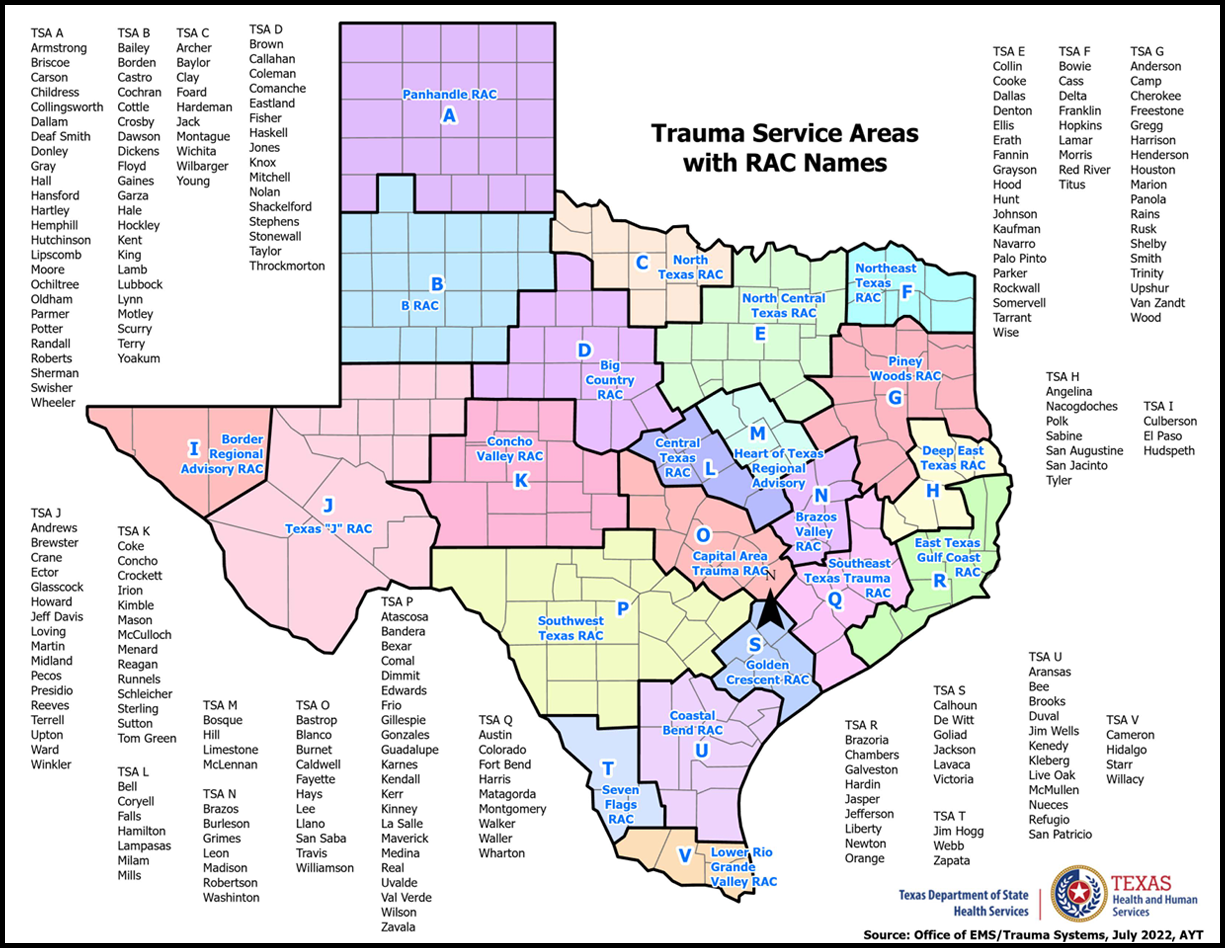
Regional Advisory Councils (RACs), such as NETRAC, are formal 501(c)(3) non-profit organizations authorized by the state to oversee trauma and emergency healthcare systems within specific Trauma Service Areas (TSAs). There are 22 RACs in Texas, one for each TSA (lettered A-V), created to coordinate hospitals, EMS, and other partners to improve outcomes, reduce injury rates, and manage disaster preparedness and response.
Key Functions of a Texas RAC
- System Development & Oversight
- Stakeholder Collaboration
- Data & Performance Improvement
- Education & Prevention
- Emergency & Disaster Preparedness
- Facility Designation Support
- Funding & Compliance
System Development & Oversight
RACs design and maintain the localized infrastructure that connects emergency medical services (EMS) with hospitals and other healthcare facilities. They establish standardized regional triage, treatment, and transfer protocols to ensure that critically ill or injured patients—such as those suffering from severe trauma, strokes, or heart attacks are automatically routed to the closest, most appropriate medical facility. By continuously monitoring communication networks and patient routing, RACs ensure the healthcare system operates as a unified, efficient network rather than a collection of isolated hospitals.
Stakeholder Collaboration
RACs serve as the neutral convening body that brings together traditionally competitive or independent healthcare entities to achieve shared regional goals. Membership includes representatives from local hospitals, EMS agencies, air medical providers, freestanding emergency rooms, and public health clinics. Through regular committee meetings and collaborative workgroups, these diverse stakeholders build relationships, resolve operational bottlenecks, and align their clinical protocols to create a seamless continuum of care for the community.
Data & Performance Improvement
Driven by clinical outcomes, RACs manage regional registries to track and analyze patient care data from the initial 911 call through hospital discharge. The data is utilized to conduct peer-review initiatives and Quality Assurance (QA) programs, allowing medical professionals to objectively review complicated cases and identify systemic gaps. By monitoring trends in mortality and care delays, RACs help regional providers implement targeted adjustments that actively reduce preventable deaths.
Education & Prevention
RACs proactively address public health safety by funding and organizing evidence-based injury prevention campaigns tailored to their specific demographics, such as fall prevention for seniors or "Stop the Bleed" training for schools. On the clinical side, they bridge educational gaps by hosting advanced trauma and resuscitation courses for rural healthcare workers who may have limited access to continuing education. These initiatives ensure that both the general public and frontline medics possess life-saving knowledge.
Emergency & Disaster Preparedness
During large-scale crises, RACs operationalize the regional components of the Texas Emergency Medical Task Force (EMTF) to coordinate mutual aid and disaster response. Whether responding to a hurricane, a mass casualty incident, or a public health emergency, the RAC manages medical communication, deploys specialized disaster assets like mobile medical units, and coordinates patient evacuation tracking. They act as the vital link between local healthcare facilities and state-level emergency management agencies.
Facility Designation Support
In Texas, hospitals must meet strict state criteria to earn formal designations such as trauma, stroke, neonatal (NICU), or maternal care centers. RACs provide essential technical assistance and pre-review consultations to guide hospitals through this rigorous Texas Department of State Health Services (DSHS) survey process. By helping facilities identify deficiencies in their care capabilities before official inspections, RACs help increase the number of highly certified specialty hospitals across the state.
Funding & Compliance
RACs are responsible for the fiduciary management and equitable distribution of state-allocated trauma funds, which are often generated through tobacco settlements and specialized driver's license fees. They administer operational grants to eligible EMS providers and hospitals, ensuring that critical funding reaches underfunded rural areas that struggle to maintain emergency readiness. To safeguard these public resources, RACs strictly audit fund usage and monitor contracts to ensure total compliance with state mandates.
How You Can Help
- Become a Member or Agency Representative
- Volunteer & Participate in Training
- Support Prevention Activities
- Donate and/or Sponsor RAC initiatives
- Attend Meetings or Join a Committee